
The United States should first and foremost support the restoration of democracy and an end to a military dictatorship
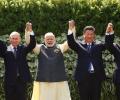
Narendra Modi's success at the BRICS summit is the best Diwali gift for India's diplomacy and marks her ascendancy to global leadership, says Tarun Vijay.

'All this talk of 'tactical nuclear weapons' or a limited nuclear war are 'false flags'! It looks like India and Pakistan are slowly but surely inching towards this realism,' says Colonel Anil A Athale (retd).

'Is Trump going to play a mediating role? Can he play a mediating role? It's out of the question.' 'Kashmir is an Indian responsibility.'

What India has failed to acknowledge is that sub-conventional war is the name of the game and irregular forces have emerged with greater strategic value over conventional and even nuclear forces, and reliance purely on conventional force and diplomacy is grossly inadequate, says Lt Gen Prakash Katoch (retired).

If India is to follow a smart cultural diplomacy, it has unmatched advantages over both China and Pakistan, says Colonel Anil A Athale (retd).

'His deposition shows that the dividing line between Pakistan's State and non-State actors had completely blurred in Mumbai's 26/11 terror strikes.'
Indians must remember that Pakistanis hate losing to India, at war or in cricket, says Sanjeev Nayyar.
'While high-level interventions may help smoothen inter-State relationships, they cannot fundamentally change the alchemy of such relationships, which are firmly rooted in mutual benefits and mutual interests,' points out Ambassador M K Bhadrakumar.

'The Chinese made their point repeatedly after August 5. They backed Pakistan more overtly than in the past.' 'Kashmir is not completely off their radar. But in order to keep the atmosphere surrounding the Chennai meeting, they did not discuss Kashmir.'

The All India Tennis Association says an unflattering perception is being created about it in the wake of Mahesh Bhupathi's removal as captain when it actually selected Rohit Rajpal because the ITF, till the last moment, had not given the impression that it would move the Davis Cup tie out of Islamabad.

India should put a check on its cheque book diplomacy with Nepal. Nepal must be made to bear the costs of its strategic provocations.
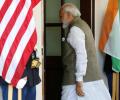
'In the next three decades up to 2050 there will be three important players at the world level.' 'India, US and China will be playing a very important role globally as the largest economies in the world.' 'These three countries will have to interact with each other much more closely because what they do and what they decide will impact the entire world.'
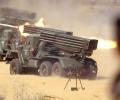
'Will it lead to a full-scale war? I doubt it.' 'But I do think there will be some kind of limited conflict.'
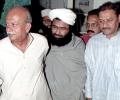
'Whichever way you look at it, it is a blow to the JeM and to the Pakistani army in general; the attack has taken place in mainland Pakistan and not in PoK.'

'It is a tense border and there are numerous elements that keep these tensions alive.' 'India is willing to militarily respond if provoked.'

Emphasising on building a "peaceful neighbourhood", Pakistan Prime Minister Nawaz Sharif on Tuesday said his country is committed to engaging India for peaceful resolution of all outstanding issues, including Kashmir, through sustained dialogue.
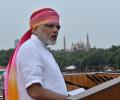
Modi talking about Balochistan, PoK and Gilgit is a tectonic shift in India's policy towards Pakistan, says Abhay Jere.

Those who know Shiv Shankar Menon will vouch that he did lots of things, substantial in the immediate neighbourhood and widespread in South Asia, but without making things public. Twenty per cent of Menon's job was visible, while 80 per cemt of his job was not known to the public, says Sheela Bhatt/Rediff.com

'Another rejection of mediation between India and Pakistan will leave Mr Trump disappointed.' 'In that case, he is likely to point out the war-like situation on the border and press for direct talks which have been stalled on account of continuing terrorism from Pakistan,' notes Ambassador T P Sreenivasan.

Billed as the most comprehensive dialogue between the world's two largest economies, it will be attended by top officials from both sides, including US Secretary of State John Kerry.

'If you behave like a nail, the adversary will behave like a hammer.'

Considering the huge stakes, the Modi government is not averse to make more diplomatic efforts to see whatever it can salvage.

In his latest response to his Pakistani counterpart Aizaz Ahmad Chaudhry's fresh invitation of August 19 for talks, Foreign Secretary S Jaishankar once again emphasised on the need for earliest possible vacation of Islamabad's illegal occupation of PoK and conveyed that not just India but the larger region is aware that Pakistan is actually a "prime perpetrator" of terrorism.
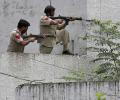
'The target for all our counter-terror operations ought to be Pakistani Punjab's population,' argues Colonel Anil A Athale (retd).

'In India foreign policy is generally handled by the prime minister.' 'One can clearly see the Vajpayee stamp on all this.' 'Only a person with poetic imagination can weave such a complex web,' says Colonel Anil A Athale (retd).
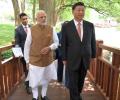
There is a sense of relief in Beijing that Modi will be at the helm of affairs in Delhi at a critical juncture in the geopolitics of the region, says Ambassador M K Bhadrakumar.
National security advisers of India and Pakistan are expected to meet in October to follow up on the meeting between Prime Minister Manmohan Singh and President Gen Pervez Musharraf in New York.
Both countries are closer than before due to these two leaders's public display of mutual connectivity and warm exchanges of words, but how it will help India to serve its interests will be known on Tuesday.
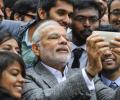
The magazine cited Modi's unconventional announcement on Twitter of his visit to Pakistan last year
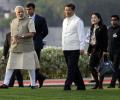
No Indian government has taken on China like this ever before and shows that the three top Indian officials -- Sushma Swaraj, Manohar Parrikar and Ajit Doval - ran into China's Great Wall on the twin questions of Pakistan and terror when they interacted with their Chinese interlocutors In past few days, says Rajeev Sharma.

Snooping is one of the oldest peccadilloes of man, observes Ambassador M K Bhadrakumar.
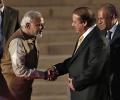
Prime Minister Narendra Modi has brought Hindi into vogue in the external affairs ministry and managed a diplomatic coup by inviting SAARC leaders, including Nawaz Sharif, to New Delhi for his swearing-in. Sheela Bhatt's impressions of the Indian prime minister's first day in office.
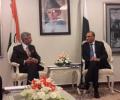
India and Pakistan on Tuesday discussed each other's 'concerns and interests' with Foreign Secretary S Jaishankar raising the issue of terror.

'They know that India is no pushover.' 'We have to be extremely vigilant, remain ready and keep strengthening our positions.' 'We have to be militarily strong, whatever be the cost.'

The United States has ruled out any mediation on the Kashmir issue as long as India rejects such a proposal and asked Pakistan to avoid employing militancy as an instrument of state policy.
